I was wandering around in Newspapers.com searching out pattern notations, when I came across this interesting article from June 8, 1945. The article, titled 'Laura Wheeler, Genius of Needlecraft' was written by Helen Dudnick. I'm reprinting the article as it was written.
Wednesday, May 30, 2018

Thursday, May 24, 2018
Columbia Minerva Calibar Yarn
And, in 1957 --- another brand introduction from Columbia Minerva --- Calibar Quick Knitting Yarn!


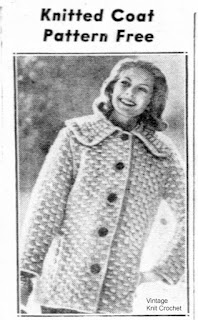
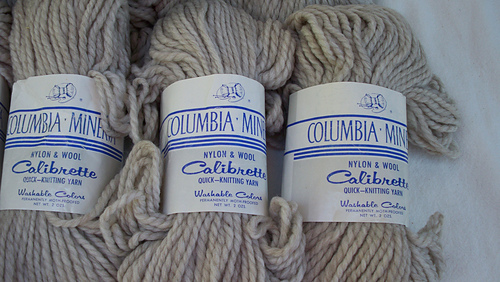


Photo from Ebay seller spatstospursvintage
A soft, fluffy, 100% Virgin Wool yarn spun especially for jiffy knit garments. 4-ply in 2 oz skeins, 70 yards
It was introduced with very little advertising fanfare in only 7 states during it's lifespan. This was at the start of the bulky yarn phase, and, perhaps Columbia Minerva believed the yarn would stand on it's name alone. The majority of their promotion came from the pattern aspect ... versus price.

1958 Newspaper promotion: "A jaunty jacket for junior miss to enjoy knitting herself Is a simple design that's perfect over a school or party dress, as a topper for slacks; or over the new tapered pants. It is a perky bulky knit with fashionably smart brass buttons and is made in a ribbed pattern design that work up quickly. The combination of Columbia - Minerva's Calibar yarn and the easy stitch make it possible to complete the jacket in less than a week. To order free knitting instructions for this jacket, send a stamped, self-addressed envelope. Ask for Pattern No. 357. Address Pattern Dept., The News, P. O. Box 1912, Grand Central Station, New York 17, N. Y.

1960 Newspaper Promotion: "Knitted coat is a natural for topping your favorite spring clothes from a sheath to a flat-pleated skirt. The model shown is three quarter length, with slimming lines and a looped yarn collar. It is a quick knit with Columbia-Minerva Calibar or Calibrette Yarn using size 8 and 13 needles. To order free knitting instructions for this coat, send a stamped. self-addresed envelope for pattern No. 462. Address Pattern Dept., THE NEWS, P. 0. Box 1912. Grand Central Station, New York 17, N. Y.
Here, the Columbia Minerva Calibrette yarn is a designated substitute. The primary difference is Calibrette is a wool/nylon blend, versus 100% wool.

The Calibar yarn was also promoted in Columbia Minerva Book No 732, Quick Hand Knits. This pattern book is featured in a post in the Shoptalk Blog.

And, the very last promotion was a lone advertisement offering the yarn at $0.49/skein. This is obviously a close out price - original introduction was $0.89/skein. And with that, Columbia Minerva Calibar yarn became a discontinued product. The Calibrette yarn was discontinued in 1963.
Now, there are a number if interesting patterns that call for these yarn. I have a small number of these patterns in the shop, should you care to browse. Should you decide to create one of these Jiffy Knits for yourself, simple choose a bulky 4-ply yarn that meets the stitch gauge of your pattern.
Thanks for dropping by,
Monday, May 7, 2018
Anne Cabot Needlework Column
The syndicated Anne Cabot Needlework column was a part of the Readers Mail family, along with the other two well known mail order pattern names - Alice Brooks and Laura Wheeler.
Now, Anne Cabot Needlework Corner is a fictional name for the column, to give it a 'personal' feel. So keep this in mind as you read the article.
Now, I don't usually do a 'mostly' in full quote of a newspaper article, but, in this case I'm making an exception.
 Quote: "This story will introduce to our readers Anne Cabot, author of the sparkling new Home Arts feature - Anne Cabot's Needlework Corner.
Today a national expert who tells women folk how to use needle and thread, wool and cotton yarn, new fabrics and colored ribbons to make lovely things for themselves and their homes. Anne Cabot found her first needlework corner at her grandmothers knee near an old base burner in a farm sitting room. Before she was 10 she could weave a darn on a sock that was a work of needlecraft art.
This alert, widely traveled, friendly American woman, successful wife and mother, had judged National Needlecraft contests year after year and has visited county and state fair needlecraft exhibitions all over the country. She has lectured between women' clubs, conducted University classes for women, sought new designs and exciting color ideas among paintings in the great European art galleries, and has sat beside the famous lace makers of Bruges and Belgium, learning their secrets.
She has taken tea and gossiped with crocheters in quaint continental towns, learning from them some of the crafts she now tells women about in her new and exciting daily column.
Mrs. Cabot was born in a small city near the Great Lakes, raised largely on her grandmothers farm and educated at a normal school. After teaching at 19, in old fashioned country schools, she began to travel and study abroad and in the United States and ultimately became one of the outstanding judges of needlecraft.
Mrs. Cabot says the old fashioned custom of crocheting or stitching gave grace and repose to a woman' appearance as she sat by the sitting room lamp, and she has been happy to see the revival of that custom. Invited everywhere because of her personal charm, and wide reputation, she usually takes along some piece of needlecraft.
In Mrs. Cabot you have a new friend, one who understands what you want in needlecraft and can tell you how to make it. Look for 'Anne Cabot's Needlecraft Corner' every day" End Quote
Now, this just goes to prove, that just because you read it in the newspaper, doesn't mean it's true!
Oh, and before I go back to work, what was the very first Anne Cabot pattern advertised? Well ....

Thanks for dropping by,
Now, Anne Cabot Needlework Corner is a fictional name for the column, to give it a 'personal' feel. So keep this in mind as you read the article.
Now, I don't usually do a 'mostly' in full quote of a newspaper article, but, in this case I'm making an exception.

Today a national expert who tells women folk how to use needle and thread, wool and cotton yarn, new fabrics and colored ribbons to make lovely things for themselves and their homes. Anne Cabot found her first needlework corner at her grandmothers knee near an old base burner in a farm sitting room. Before she was 10 she could weave a darn on a sock that was a work of needlecraft art.
This alert, widely traveled, friendly American woman, successful wife and mother, had judged National Needlecraft contests year after year and has visited county and state fair needlecraft exhibitions all over the country. She has lectured between women' clubs, conducted University classes for women, sought new designs and exciting color ideas among paintings in the great European art galleries, and has sat beside the famous lace makers of Bruges and Belgium, learning their secrets.
She has taken tea and gossiped with crocheters in quaint continental towns, learning from them some of the crafts she now tells women about in her new and exciting daily column.
Mrs. Cabot was born in a small city near the Great Lakes, raised largely on her grandmothers farm and educated at a normal school. After teaching at 19, in old fashioned country schools, she began to travel and study abroad and in the United States and ultimately became one of the outstanding judges of needlecraft.
Mrs. Cabot says the old fashioned custom of crocheting or stitching gave grace and repose to a woman' appearance as she sat by the sitting room lamp, and she has been happy to see the revival of that custom. Invited everywhere because of her personal charm, and wide reputation, she usually takes along some piece of needlecraft.
In Mrs. Cabot you have a new friend, one who understands what you want in needlecraft and can tell you how to make it. Look for 'Anne Cabot's Needlecraft Corner' every day" End Quote
Now, this just goes to prove, that just because you read it in the newspaper, doesn't mean it's true!
Oh, and before I go back to work, what was the very first Anne Cabot pattern advertised? Well ....

Thanks for dropping by,
Dawn Baby Yarn, American Thread
Dawn Baby Yarn, from the American Thread Brand ....


This American Thread Yarn was introduced to the market in late 1946 with very little fanfare .. just a simple yarn shop advertisement in Lubbock, TX only. This would imply that American Thread did not finance the introduction with a 'typical' major markets promotion.
 The yarn started at 1-oz skeins; by the mid 1960's, it was expanded to include 2-oz skeins as well.
 Other than a limited number of sale ads (like above), the only other promotion was this 1961 Free 'mail-away' offer for an adorable baby set. I'm sure the baby yarn was featured in an American Thread pattern book, or two, however, I've not yet identified them. (Perhaps you know?)
In 1977, the yarn disappeared from shops with as little fanfare as it was introduced in 1946. A random guess, on my part, would be the growing of popularity of the Dawn Wintuk Baby Yarn -- which was a nylon blend, led the sales for American Thread in baby yarn.
And, that's all I know. If you have a design that you'd like to try, substitute a lightweight baby yarn that meets the gauge of of your pattern ... be it 100% wool, or one of the marvelous blends.
If you know more .... Please share.
Thanks for dropping by,

(photo from collection of Ravelry member)
Dawn Baby Yarn - 100% Wool, 3 ply, Art W45 in white, pastels and multi-color skeins

This American Thread Yarn was introduced to the market in late 1946 with very little fanfare .. just a simple yarn shop advertisement in Lubbock, TX only. This would imply that American Thread did not finance the introduction with a 'typical' major markets promotion.


In 1977, the yarn disappeared from shops with as little fanfare as it was introduced in 1946. A random guess, on my part, would be the growing of popularity of the Dawn Wintuk Baby Yarn -- which was a nylon blend, led the sales for American Thread in baby yarn.
And, that's all I know. If you have a design that you'd like to try, substitute a lightweight baby yarn that meets the gauge of of your pattern ... be it 100% wool, or one of the marvelous blends.
If you know more .... Please share.
Thanks for dropping by,
Thursday, May 3, 2018
Dawn Bulky Yarn, American Thread
This afternoon, I decided to take a break and cover one of the vintage yarns. Now, how do I decide which one? Well, today I went to knitting page 27 in the shop and selected the first pattern. And, what was the yarn? You guessed it ... American Thread "Dawn" Bulky yarn.


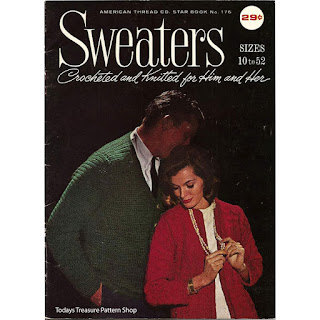 The yarn promotion was supported by release of American Thread Star Book 176 - Sweaters Crocheted and Knitted from Him and Her.

 Another newspaper promotion that took place, in New York only, between 1959 and 1965 was a free mail order pattern offer. It's interesting that there is no mention of the book the individual pattern was associated as an additional promotion. I wonder ... if these were perhaps the same patterns given away at in Yarn shops with purchase.
 The last advertisement found was from 1965, still at 2 oz. The price here is less that the introduction of $0.79/skein. It would be my guess that was close-out price. Also note the the makeup now says 50% wool, 50% Dupont Nylon. I'm thinking this was an advertising mistake, as American Thread also had a Dawn Bulky Wool and Nylon yarn, which was a 50/50% blend.
So, there was not a lot learned about this yarn. We know that it was in the 'super bulky' category that was available in the market between 1958 and 1965. If you are looking for a substitute, you will need to rely on the stitch gauge for your desired pattern. AND, there are quite a number of patterns available that called from this Bulky Yarn. I have a variety in the shop as well, should you care to browse.
Thanks for dropping by.

Dawn Bulky Yarn made it's appearance in yarn shops -- and newspaper advertisements -- in 1958, with an initial price of $0.79 per 2-oz skein.

American Thread Co., "Dawn" Bulky Yarn, Art W33; 2 fold, 100% Virgin Wool. This is a super bulky yarn, worked on big needles - great for sweaters, hats and bags.


As well as American Thread Star Book 117 - New Hats, Bags, Bulkies


So, there was not a lot learned about this yarn. We know that it was in the 'super bulky' category that was available in the market between 1958 and 1965. If you are looking for a substitute, you will need to rely on the stitch gauge for your desired pattern. AND, there are quite a number of patterns available that called from this Bulky Yarn. I have a variety in the shop as well, should you care to browse.
Thanks for dropping by.
Saturday, April 28, 2018
The American Weekly, Mail Order Patterns
The American Weekly was a weekly magazine insertion to the Sunday newspapers from the late 1896 until 1966. The paper (from my recall as a young girl) was perhaps in the 16 x 22 size range, fold over design, with a glossy cover and a variety of rather meaningless (my opinion) articles, along with, of course, the prized Womens' Sections.
 The American Weekly was exclusive to their pattern column, offering only patterns under the name of The American Weekly, of course.
 And, just like the other mail order services, the reader sent a note with the pattern number and payment and a couple weeks later the pattern arrived in the mail.
 The pattern service started in 1936. The first couple years, the offerings were sewing patterns only. Then, in 1938, the patterns began expanding into the usual sewing, crochet, knitting and embroidery.
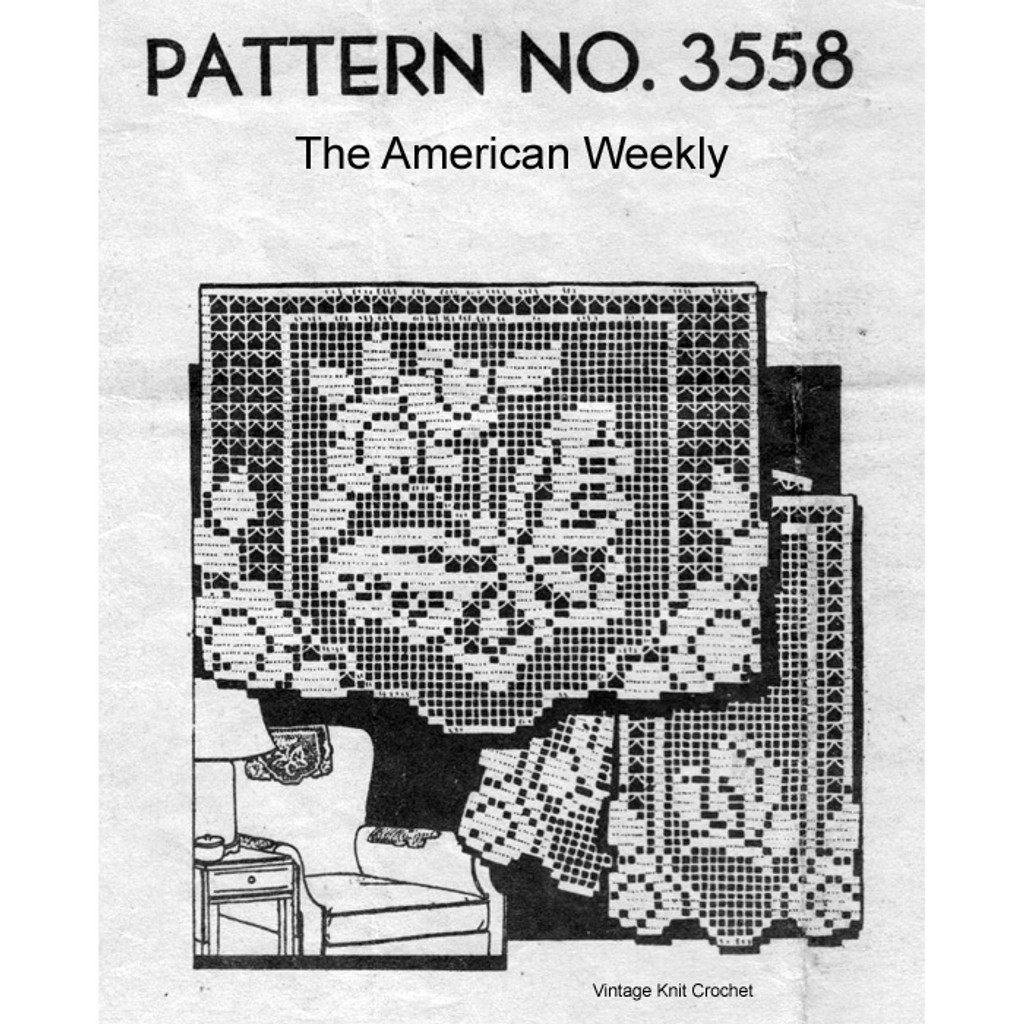 The patterns were in the same 'known' mail order format - the large large 17 x 22 inch single sheet of paper, folded into sections. The needlework patterns typically included large pattern stitch diagrams and blocking charts, when appropriate.
The pattern offered by The American Weekly were the same Designs of Laura Wheeler / Alice Brooks. The same cover pictures, as well as directions and diagrams were the same. Only difference - the pattern name displayed and the envelopes and the pattern numbers themselves. The American Weekly patterns were in the 3000 through 3800 series, depending upon the pattern type.
Notes: In the 3100 number series.
 An August 28, 1949 newspaper reported that The American Weekly pattern sales were 260,000 for a month. Now, it would be interesting to know if that was exclusive to The American Weekly, or that was the 'Readers Mail' syndicate.
There are very few newspaper references on The American Weekly papers. The paper was published on very thin paper, which did not stand-up to time - i.e., being scanned into archives. (What a real loss!). There are a few references out there in Internet land as there were a couple newspapers - for example Cincinnati OH, that printed the Womens section in their newspaper page, not as a separate circular.
The American Weekly Publication was discontinued in 1966.
If you'd care to look, I have a number of these patterns in the shop (and more waiting to be entered). If you happen to know more information about The American Weekly Patterns, I'd appreciate your sharing!
Thanks for dropping by.


The pattern offered by The American Weekly were the same Designs of Laura Wheeler / Alice Brooks. The same cover pictures, as well as directions and diagrams were the same. Only difference - the pattern name displayed and the envelopes and the pattern numbers themselves. The American Weekly patterns were in the 3000 through 3800 series, depending upon the pattern type.
Notes: In the 3100 number series.

There are very few newspaper references on The American Weekly papers. The paper was published on very thin paper, which did not stand-up to time - i.e., being scanned into archives. (What a real loss!). There are a few references out there in Internet land as there were a couple newspapers - for example Cincinnati OH, that printed the Womens section in their newspaper page, not as a separate circular.
The American Weekly Publication was discontinued in 1966.
If you'd care to look, I have a number of these patterns in the shop (and more waiting to be entered). If you happen to know more information about The American Weekly Patterns, I'd appreciate your sharing!
Thanks for dropping by.
Friday, April 20, 2018
Dritz Luxury Corde Yarn, Article 100
World War II has just ended and the yarn makers are again gearing up to produce yarns for the Home Needle Crafter, versus wools for the military market. And, of course, John Dritz and Sons, continued with their brands for accessories ... in this case - Dritz Luxury Corde.
 Dritz Luxury Corde: 50% rayon, 50% Cotton in 144 yard cones. Primarily used for fashion asseccories - hats and bags, with a soft stiffness to hold shape.

The yarn was introduced in the market mid-year 1945 at the surprisingly high price (based on the time period) of $1.50 per cone in a limited number of colors.

Dritz supplied pattern sheets to the yarn shops, who displayed and gave them to customers with purchase of the product. (A very popular promotion, with many shops giving lessons as well). In addition Dritz published pattern books. The advertisement, for Volume 17 - Corde Style Book - was advertised in Needlework magazines to further entice the consumer. Note that this ad includes 'Dritz Sparkle Corde". I completed quite a number of searches and find no reference to this product. I am assuming it is Luxury Corde with a strand of metallic.

And, moving into the early 1950's, pre-packaged kits became the rage and Dritz took their's a step further. This bag kit (1953) cross-promoted their products. All the products in the bag - plastic, corde and hardware all products of Dritz!

The high introductory price of $1.50 per cone did not hold -- there were a number of competitors that drove the price down. Here, in this 1957 ad, the regular price had dropped to $1.00, which sales as low as 49 cents.
And, in 1958, after a 13 year run, Dritz withdrew their Luxury Corde from the market.
Out there in internet land are a number of pattern books and leaflets with wonderful designs that are work pursuing. I have a few patterns in the shop as well, should you care to browse.
Now, you may be asking ... just what substitute do I use. Well, I found the following suggestion in a late 1950's Alice Books Mail Order pattern:
Okay, time for me to get back to work. Thanks for dropping by.


The yarn was introduced in the market mid-year 1945 at the surprisingly high price (based on the time period) of $1.50 per cone in a limited number of colors.

Dritz supplied pattern sheets to the yarn shops, who displayed and gave them to customers with purchase of the product. (A very popular promotion, with many shops giving lessons as well). In addition Dritz published pattern books. The advertisement, for Volume 17 - Corde Style Book - was advertised in Needlework magazines to further entice the consumer. Note that this ad includes 'Dritz Sparkle Corde". I completed quite a number of searches and find no reference to this product. I am assuming it is Luxury Corde with a strand of metallic.

And, moving into the early 1950's, pre-packaged kits became the rage and Dritz took their's a step further. This bag kit (1953) cross-promoted their products. All the products in the bag - plastic, corde and hardware all products of Dritz!

The high introductory price of $1.50 per cone did not hold -- there were a number of competitors that drove the price down. Here, in this 1957 ad, the regular price had dropped to $1.00, which sales as low as 49 cents.
And, in 1958, after a 13 year run, Dritz withdrew their Luxury Corde from the market.
Out there in internet land are a number of pattern books and leaflets with wonderful designs that are work pursuing. I have a few patterns in the shop as well, should you care to browse.
Now, you may be asking ... just what substitute do I use. Well, I found the following suggestion in a late 1950's Alice Books Mail Order pattern:
1 strand of corde = 4 strands of Mercerized Crochet and Knitting Cotton held together
or a double strand of Sports Yarn.
Okay, time for me to get back to work. Thanks for dropping by.
Subscribe to:
Posts (Atom)